


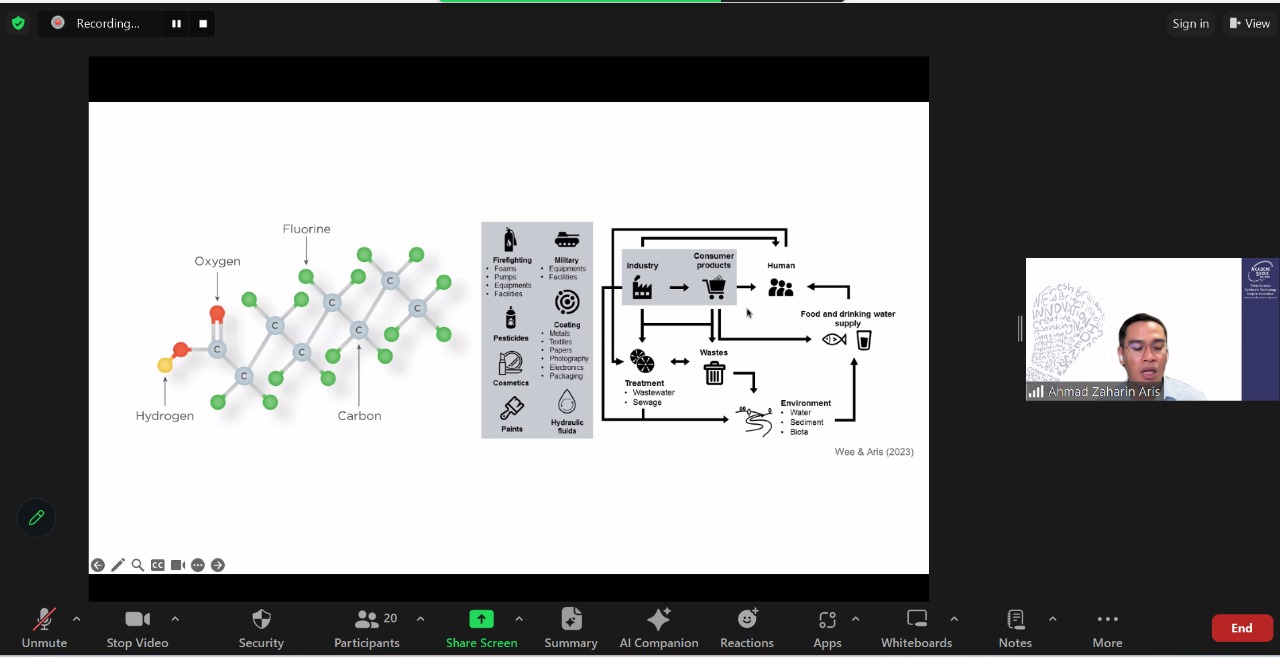
Medan, November 7th - Professor Dr. Ahmad Zaharin Aris, CEnv, MRSC, FAPM, FASc., a distinguished expert in environmental science, delivered an enlightening lecture on "Environmental Forensics and Hydrochemistry" today. The lecture was held in a hybrid format, with a live audience in Meeting Room No. 1 at the Postgraduate School of the Universitas Sumatera Utara (USU) and an online audience joining through Zoom Meeting.
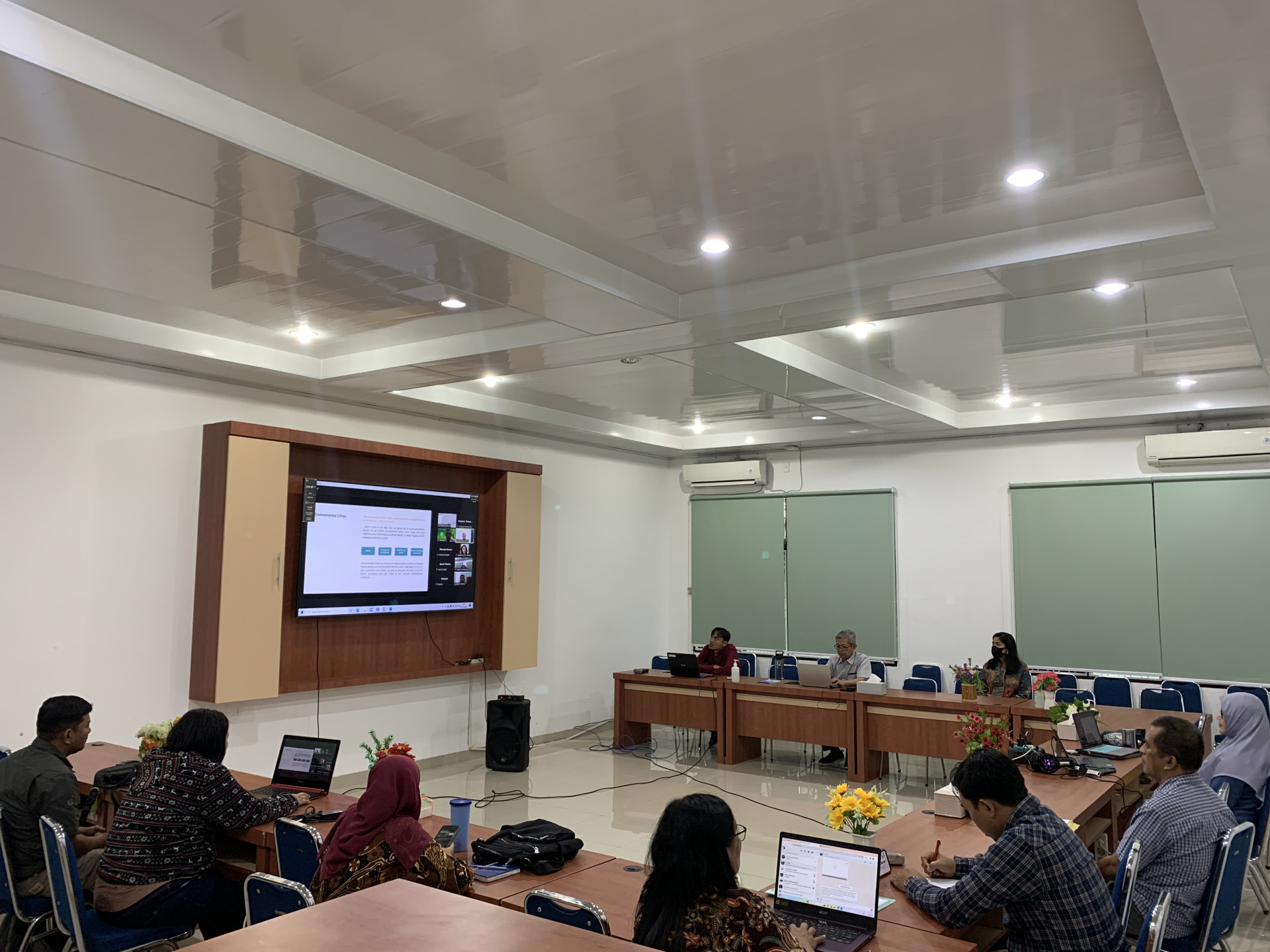
During his lecture, Professor Dr. Ahmad Zaharin Aris focused on the pressing issue of environmental pollution in Southeast Asian countries, with a particular emphasis on Malaysia, Indonesia, and Thailand. He shed light on the complex challenges these countries face, ranging from industrial pollution to the impact of tourism on their fragile ecosystems.
One of the highlights of the lecture was a question posed by an attendee named Eriyusni. Eriyusni inquired about the potential environmental consequences of fish farming in cages in Lake Toba, considering the region's plans for international tourism. Eriyusni was particularly interested in what steps the government should take to address this issue.
Professor Dr. Ahmad Zaharin Aris provided a comprehensive analysis in response to the question. He explained that numerous interconnected environmental and economic factors influence Lake Toba. Proper waste management, especially in the context of tourism, is crucial to safeguarding the lake's delicate ecosystem. Excess waste can lead to toxic water conditions, negatively affecting aquatic life and the lake's microbiome.
Professor Ahmad Zaharin Aris also highlighted the issue of overcapacity, citing the presence of an estimated one million fish in cages. He stressed the need for a thorough analysis to assess the feasibility and sustainability of open-water fish farming, with necessary regulations to prevent environmental harm.
Furthermore, he pointed out that fish are not only a potential issue but also a significant attraction in Lake Toba. Balancing the ecological impact with the economic benefits of the fishing industry is a complex challenge that requires careful planning and consideration, particularly as the region seeks to develop its international tourism potential.
In conclusion, Professor Dr. Ahmad Zaharin Aris underscored the importance of collecting samples of clams, fish, and microbiomes to track population changes and assess the quality of water, soil, and air. This data is deemed critical for environmental monitoring and protection, as it helps understand and mitigate the effects of pollution in the region.